Sleepless Nights Unto Death
As a child, the night before Christmas is a sleepless one. As we get older, maybe those sleepless nights happen before a first date, or a job interview, or a promotion. No matter the reason, we’ve all tossed and turned our way through nights before. Many of us, especially younger college students, probably don’t get that much sleep anyway (at least, way less sleep than we should be getting). We laugh and shrug off the advice of the responsible adults in our lives and stay up a few hours longer. At some point, we let sleep overtake us and fall asleep. Yet what if no matter how hard we tried, we couldn’t fall asleep? Unfortunately, for people with fatal familial insomnia, that’s not just a hypothetical, but a reality.
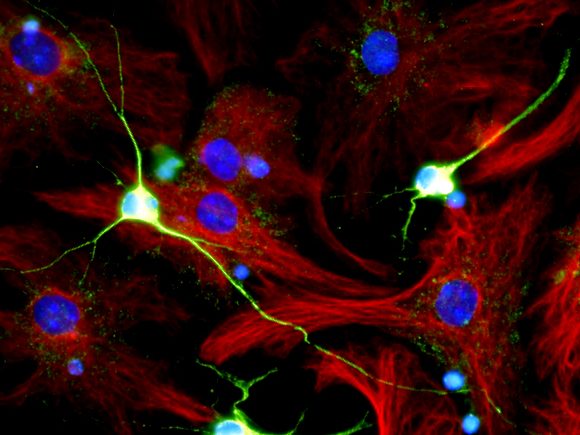
FFI is an extremely rare genetic prion disease that causes progressively worse insomnia till death. It’s a prion disease, involving misfolded proteins. Unlike other prion diseases, a genetic mutation causes this misfolding. In FFI, a mutated prion protein (PRNP) gene, which codes for the PrPC protein, causes PrPC to adopt a different conformation, known as PrPSc. This variant wreaks havoc on neurons in the thalamus, a part of the brain responsible for maintaining a sleep/wake cycle. As these thalamic neurons die, the brain isn’t able to regulate sleep, leading to gradually increasing insomnia and autonomic nervous system malfunctioning until death.
The scary thing about prion diseases like FFI is just how easily they can spread within and between cells in a person with the disease. At that cellular level, the misfolded PrPSc has a structure that is predominantly composed of beta sheets, as opposed to the normal helical structure of PrPC. These beta sheets act as little Velcro strips on proteins and can help proteins adopt what’s known as an amyloid structure, where a large amount of proteins stack on top of each other using their beta sheets (sticking together like Velcro). PrPSc causes regularly folded PrPC to convert to a PrPSc conformation, leading to a whole mass of sticky proteins that clump together because of their “Velcro strips” of beta sheets. These protein aggregates are really tough for the cell to destroy using its designated “garbage disposal” systems. The lysosomal system, where the cell normally breaks down misfolded proteins and foreign materials, can’t handle these sticky protein clumps. The proteasome, a breakdown site specifically for proteins, also can’t handle all the prion protein. Thus, a bunch of these protein clumps build up inside the cell until it’s physically incapable of carrying out its normal functioning. Normal proteins get pulled into the aggregate, so they can’t do their jobs. The cell ends up being put under oxidative stress as well; this, combined with the nonfunctional proteins, ultimately leads to the death of the affected cell.
Sometimes, the cell will try to send an exosome containing the prion protein aggregates out into the extracellular environment. Instead of trying to deal with all the misfolded proteins, the cell forms a special kind of vesicle around them and sends them outside, so they will not cause any more problems inside the cell. However, if those PrPSc variants in the extracellular space come into contact with a normal PrPC in a different cell, they can corrupt them too, spreading the problem to other cells, and leading to more cell death. In a post-mitotic environment like the brain, cells don’t divide. Once a cell dies, it’s gone forever; in the case of FFI, it’s the thalamic neurons that are lost forever, and lead to problems.
Sleep is a gift, a reprieve from the struggles of life and a time of blissful ignorance. Yet more so, it is absolutely essential for our survival. Without it, we die, and this is the case for those unlucky enough to suffer from FFI. Though we have come a long ways in understanding the human body from the days of the four humors, we are still often limited in our power to know how to fix it when things go awry. As such, FFI has no cure, and the only treatments we have for it are palliative. However, as research into prion diseases progresses, hopefully a treatment can be found.
Reference
Khan Z, Sankari A, Bollu PC. Fatal Familial Insomnia. [Updated 2024 Feb 25]. In: StatPearls [Internet]. Treasure Island (FL): StatPearls Publishing; 2025 Jan-. Available from: https://www.ncbi.nlm.nih.gov/books/NBK482208/
 King Lab at Creighton University