Have you ever played football? What about soccer? Or boxing? If you have engaged in these contact sports, you have probably received a hit to the head and probably lost count of how many times. These hits to the head may have a bigger impact than you are aware of. Repeated head impacts can lead to something called Chronic Traumatic Encephalopathy or CTE. This condition has recently gained public traction, with many celebrity sports players being diagnosed, such as NFL Hall of Famer Frank Gifford, Super Bowl-winning quarterback Ken Stabler, and more infamously Arron Hernandez. First characterized as “Punch Drunk Syndrome,” CTE is a disease characterized by the death of nerve cells in the brain that worsens over time and is caused by repeated traumatic brain impacts. Symptoms take several years to decades after injury to develop and include things cognitive and memory decline. This, unfortunately, makes it common for athletes, military veterans, and other professions where the head is repeatedly impacted. Although the concrete biological process and mechanism that drive CTE is unknown, scientists have made ground in discovering how it causes its effects.
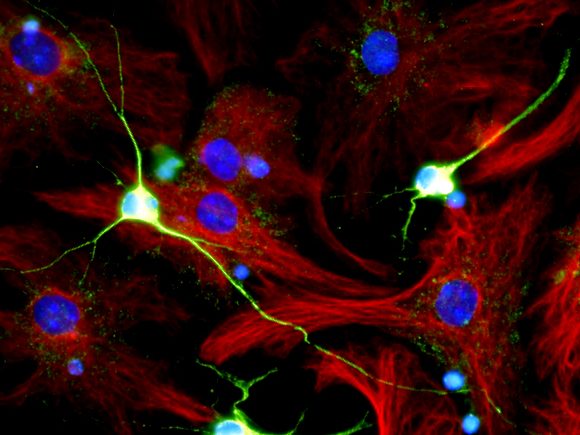
The main driver behind CTE and the progression of the disease is hyperphosphorylated tau protein. Hyperphosphorylated tau is involved in maintaining structure within the brain and providing support to microtubules. Microtubules are essential because they operate like a transport system within the brain, helping cells function normally. In CTE, tau proteins go crazy. These proteins can denature from their typical structure, dissociate from their usual targets, and move to new areas within the cell. Additionally, hyperphosphorylated tau proteins can induce misfolding and clumping of other tau proteins, leading to a cascading effect in the brain. The spread of the hyperphosphorylated tau causes cells to become dysfunctional, causing other cells to misfunction, and leading to the widespread neuronal death seen in CTE. What makes hyperphosphorylated tau spreading in CTE distinct from other neurological disorders? Scientists believe that CTE tau proteins misfold and spread slowly, leading to the disease’s slow rates of effect. The disease also progresses in the cortical regions, especially the frontal lobe, before moving into deeper areas of the brain. Due to its pathology and effects on the frontal lobe, patients often experience severe personality changes, like their ability to control their temper and impulsive behavior. Symptoms also include memory issues, depression, and emotional instability. These significantly impair effected patients’ day to day lives and eventually require assistive care. This creates massive tolls on family and support systems.
One of the most frustrating parts of CTE is that it is not curable and cannot be diagnosed until after death, making it difficult to understand and treat. So, for now, the best that can be done to combat this debilitating disease is preventative measures. Sports regulators must increase play protection, protective gear must be expanded, and people should be careful how often they partake in activities that could lead to brain injury. One preventative measure on the rise is with the NFL and guardian caps. These are soft shell caps that surround the hard casing of the
helmet. NFL research has shown that this reduces impact force and concussion rates, and players could voluntarily use these starting in 2024. Although CTE is not fully understood, scientists work hard to understand its mechanisms, develop preventative gear, and treatments. However, for now, before you pick up the football, make sure to think about the impact this could have on your brain in the distant future.
 King Lab at Creighton University