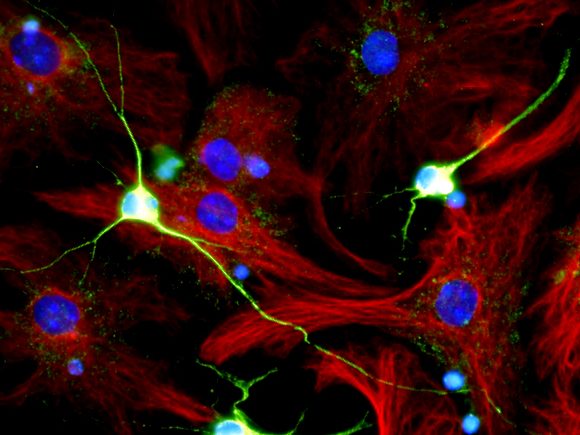
For years, doctors were left confused by children who seemingly felt compelled to hurt themselves repeatedly, despite crying out in pain and suffering. This neurological medical mystery could not be explained. Why would the brain willingly cause the body to harm itself? After much work and doubt, scientists eventually discovered a rare neurological condition called Lesch-Nyhan disease.
Lesch-Nyhan disease profoundly affects both the nervous system and behavior. It was first discovered by Michael Lesch and William Nyhan in 1964. This condition is caused by a mutation in the gene responsible for producing hypoxanthine-guanine phosphoribosyl transferase (HPRT), an enzyme responsible for recycling purines. When this enzyme is missing or deficient, purines break down into uric acid, leading to high levels of uric acid within blood circulation. This syndrome is most often discussed regarding its metabolic changes, but some of the more interesting changes are neurological. These neurological effects include athetoid movements (involuntary and slow movements), developmental delays, and forms of self-injury.
Many of the symptoms of this condition begin to present themselves during early childhood. People who have this disease often appear normal at birth, but rapidly decline within the first year of life, developing muscle hypotonia (low muscle tone) as one of the earliest observable signs. As the disease progresses, the child develops symptoms such as dystonia, spasticity, and choreoathetosis, which is involuntary jerky movements (chorea) and slow writhing movements (athetosis). Because of these symptoms, many with this condition are unable to walk without assistance and struggle with posture and voluntary movements, such as being unable to hold their own head up. These symptoms resemble other movement disorders, such as cerebral palsy, making initial diagnosis harder to determine despite unique biological causes.
One of the most notably and feared behavior change is the compulsive self-harming actions often performed by people with Lesch-Nyhan disease. These behaviors include repetitive biting of fingers, lips, cheeks, or other body parts. It could go as far as amputation of fingers or toes or biting off their own tongues. This behavior also can include harming themselves with sharp objects by stabbing their own eyes. As such, the prognosis for this condition is often very poor, with most patients dying within their teens or early twenties.
While there are many regions of the brain correlated with this disease, this disease is most strongly associated with defects in the basal ganglia. The basal ganglia play a crucial role in regulating and fine-tuning movement to generate desired movement and block undesired actions. In patients who have this condition, the basal ganglia are marked by substantially decreased levels of dopamine, leading to significantly disrupted control of movements and regulation of impulses. Thus, this lack of dopamine is associated with not only the harmful change in movement activity, but also with various behavioral effects.
Luckily, this condition remains very rare, affecting between 1 in every 250,000 children to 1 in every 380,000 children and mostly only affecting males. This condition does not have a known cure, but treatment focuses on medications to control uric acid levels or ease behavioral issues. Further research into this condition is being performed to better understand it, in hopes of finding a better treatment or cure for those suffering from its effects.
Sources:
Baumeister, A. A., & Frye, G. D. (1985). The biochemical basis of the behavioral disorder in the lesch-nyhan syndrome. Neuroscience & Biobehavioral Reviews, 9(2), 169–178. https://doi.org/10.1016/0149-7634(85)90043-0
Ernst, M., Zametkin, A. J., Matochik, J. A., Pascualvaca, D., Jons, P. H., Hardy, K., Hankerson, J. G., Doudet, D. J., & Cohen, R. M. (1996). Presynaptic dopaminergic deficits in Lesch–Nyhan disease. New England Journal of Medicine, 334(24), 1568–1572. https://doi.org/10.1056/nejm199606133342403
Jathar, P., Panse, A. M., Jathar, M., & Gawali, P. N. (2016). Lesch–Nyhan Syndrome: Disorder of self-mutilating behavior. International Journal of Clinical Pediatric Dentistry, 9(2), 139–142. https://doi.org/10.5005/jp-journals-10005-1350
Jinnah, H. A., & Visser, J. E. (2006). Lesch-Nyhan.org. https://www.lesch-nyhan.org/en
Jinnah, H. A., Ceballos-Picot, I., Torres, R. J., Visser, J. E., Schretlen, D. J., Verdu, A., Larovere, L. E., Chen, C.-J., Cossu, A., Wu, C.-H., Sampat, R., Chang, S.-J., de Kremer, R. D., Nyhan, W., Harris, J. C., Reich, S. G., & Puig, J. G. (2010). Attenuated variants of Lesch-Nyhan disease. Brain, 133(3), 671–689. https://doi.org/10.1093/brain/awq013
Jinnah, H. A., Visser, J. E., Harris, J. C., Verdu, A., Larovere, L., Ceballos-Picot, I., Gonzalez-Alegre, P., Neychev, V., Torres, R. J., Dulac, O., Desguerre, I., Schretlen, D. J., Robey, K. L., Barabas, G., Bloem, B. R., Nyhan, W., De Kremer, R., Eddey, G. E., Puig, J. G., & Reich, S. G. (2006). Delineation of the motor disorder of Lesch–Nyhan disease. Brain, 129(5), 1201–1217. https://doi.org/10.1093/brain/awl056
Visser, J. E., Bär, P. R., & Jinnah, H. A. (2000). Lesch–Nyhan disease and the basal ganglia. Brain Research Reviews, 32(2–3), 449–475. https://doi.org/10.1016/s0165-0173(99)00094-6

