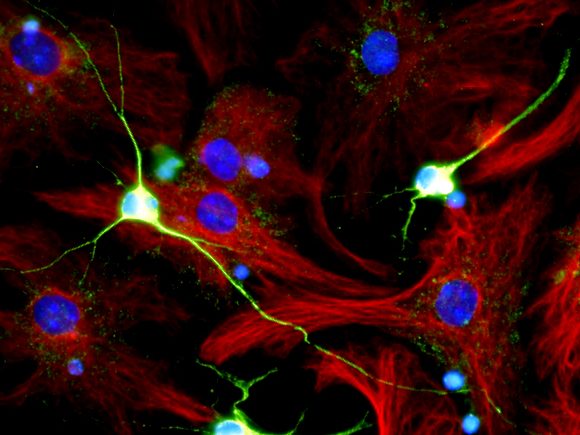
We tend to assume our senses act like a camera, recording the world as it is. Immanuel Kant argued the opposite. Copernicus had explained the heavens by putting the observer in motion insofar as we revolved around the sun; Kant made a similar flip, his own “Copernican revolution,” by claiming that objects conform to the structure of our minds rather than our minds conforming to objects. For Kant, we never meet the world as it is in itself. We only meet the world as it appears to us, already shaped by space, time, experience and cause and effect. Modern neuroscience tells a strikingly similar story: the brain does not passively receive reality; it actively constructs it.
Mooney images show this idea in real life. These are blotchy black-and-white pictures that look like random shapes at first. Once you see the original photo, a face or an animal suddenly jumps out, and you can never unsee it again. The image on the page never changed. What changed was your experience with the object. The brain uses what it has seen before to predict what it is seeing now, an idea called predictive processing. Perception is less a recording and more the brain’s best guess.
If reality is built, psychosis can be understood as the building of reality being altered then the traditional way. Two leading theories explain how. The first is the aberrant salience hypothesis, proposed by Shitij Kapur. Normally, dopamine helps the brain flag what is important or surprising, so we pay attention to it. In psychosis, dopamine signaling becomes excessive and fires at the wrong times, so ordinary things get tagged as deeply significant. A stranger’s glance, a license plate, or a song on the radio starts to feel like a personal message that will cause some action to follow. The person is not inventing this feeling; the brain is genuinely telling them it matters. Delusions then form as the mind’s attempt to explain why everything suddenly feels so charged with meaning.
The second is the strong prior’s theory, studied by Philip Corlett. Instead of the senses overwhelming the brain, the brain’s expectations, or “priors,” overwhelm the senses. A person’s beliefs about what is happening start to shape what they actually perceive, so they may hear or see things that fit their expectations rather than what really occurred. Just like the hidden face in a Mooney image, the expectation fills in the picture, except now it fills in something that is not there.
A 2017 study by Powers and colleagues showed this in the lab. Participants learned to link a flash of light with a faint tone. Later, when the light appeared alone, many reported hearing the tone anyway. People who hear voices in daily life were more likely to have these learned hallucinations and were more confident they were real. The two theories may even fit together. Early in psychosis, aberrant salience can make the world feel strange and meaningful. As the person builds beliefs to explain that strangeness, those beliefs can harden into strong priors that reshape perception itself. Either way, psychosis is result from our experiences with objects that is strayed than the traditional way.
This raises a hard neuroethical question. If every reality is constructed, a person in psychosis has not lost reality; their brain has built a different one from the world’s shared reality. Within that reality, their beliefs and actions may make complete sense. So, who gets to say their reality, or the actions that follow from it, is wrong? The law already wrestles with this. Insanity defenses ask whether a person could understand what they were doing or that it was wrong, which treats actions as reasonable responses to the reality the person was living in. Still, shared reality matters for a reason. It is the one we check against each other, and it is where consequences land. A belief that one’s food is poisoned can lead to real starvation, and many people in psychosis experience real distress. The goal, then, is not to declare their reality false, but to take it seriously as their experience while helping them reconnect with the world they share with others.
Kant suggested over two centuries ago that the mind shapes the world we experience, and neuroscience is now showing how. Psychosis reveals how fragile and personal that construction is. Recognizing that all of us build our realities may be the first step toward treating people whose realities differ from ours with more understanding and less judgment.
References
Corlett, P. R., Horga, G., Fletcher, P. C., Alderson-Day, B., Schmack, K., & Powers, A. R. (2019). Hallucinations and strong priors. Trends in Cognitive Sciences, 23(2), 114–127.
Kant, I. (1998). Critique of pure reason (P. Guyer & A. W. Wood, Trans.). Cambridge University Press. (Original work published 1781)
Kapur, S. (2003). Psychosis as a state of aberrant salience: A framework linking biology, phenomenology, and pharmacology in schizophrenia. American Journal of Psychiatry, 160(1), 13–23.
Powers, A. R., Mathys, C., & Corlett, P. R. (2017). Pavlovian conditioning–induced hallucinations result from overweighting of perceptual priors. Science, 357(6351), 596–600

