You wake up in the morning and get ready for the day. From buttoning up your shirt to making your lunch, and tying your shoes before you walk out the door, you take for granted the everyday tasks that two hands allow you to complete with ease. Those who undergo an amputation, however, are constantly reminded of the limb’s functional significance. While the functional obstacles experienced by a person post-amputation pose life-altering challenges, patients will also perceive severe pain in the amputated arm or leg, described by burning, stabbing, cramping sensations. This perceived pain in a limb or body part that is no longer there is called “phantom limb pain”, and understanding its mechanisms was crucial for developing quality, long term treatments for patients experiencing it.
Until the end of the 20th century, a lack of understanding regarding the neurological mechanisms of phantom limb pain failed patients suffering from it. Doctors frequently prescribed painkillers like opioids, viewing the perceived tradeoff of pain relief for hormonal dysfunction, cognitive impairment, and dependence (among other side effects of opioids) as “worth it” in the long run. However, by lacking any mechanistic understanding of phantom limb pain, this treatment was often harmful for patients (Zhou, 2019). Peripheral axons severed in the amputation process often regenerate with fewer mu opioid receptors, meaning the short-term benefits of opioids were minimal (Kohno et al., 2005). When patients’ pain was not significantly reduced, clinicians regularly turned to higher opioid doses, leading patients to experience hyperalgesia (increased baseline pain), respiratory depression, and higher rates of addiction without long-term relief.
Since this era, scientists and clinicians have collaborated to investigate the mechanisms driving phantom limb pain. While debate still exists among experts regarding the primary cause of phantom limb pain, evidence suggests that multiple mechanisms can contribute to a given patient’s pain and that the degree to which a given mechanism contributes to the pain experience varies across patients. Leading theories today are categorized as central or peripheral mechanisms, according to the branch of the nervous system they manifest in.
One of these theories was put forth in the late 1990s by neuroscientist Vilayanur S. Ramachandran. Through a series of studies in patients after amputation, Ramachandran hypothesized that cortical remapping was a key driver of phantom limb pain (Guenther, 2016). This theory suggests that after undergoing amputation, activity in the primary motor cortex that cannot be translated to actual motor movement in the amputated limb leads to a “sensory-motor mismatch,” corresponding to the deprivation of feedback in the area of the primary somatosensory cortex responsible for sensory processing of the amputated limb. According to the cortical remapping theory, neighboring regions of the primary somatosensory cortex respond by expanding into the region that previously represented the missing limb. This sensory-motor mismatch also correlates to increased activity in the primary motor cortex, likely as an attempt to overcompensate for the lack of movement in response to initial cues. These changes are hypothesized to contribute to phantom limb pain by disrupting the relationship between motor commands and sensory feedback, potentially producing painful sensations perceived as arising from the missing limb. Recent imaging studies exploring the cortical remapping theory have demonstrated meaningful supporting evidence. One study, published in Nature, utilized functional Magnetic Resonance Imaging (fMRI) to investigate the relationship between phantom limb pain and activity in the sensory and motor areas of the cortex. Data revealed that “Neural activity in M1 [the primary motor cortex] was positively related to PLP [phantom limb pain] intensity in amputees with [phantom limb pain]”, providing further evidence of the theorized overcompensation by the motor cortex (Andoh et al., 2020). Another study investigating cortical remapping discussed that somatosensory reorganization following arm amputation resulted in “changed boundaries of the S1 [primary somatosensory cortex] body map” (Makin et al., 2020). Together, these studies demonstrate cortical adaptations after amputation that contribute to phantom limb pain.
Ramachandran’s great therapeutic contribution was derived from his cortical remapping theory. This therapeutic technique is known as mirror therapy, and it is still a widely used, non-invasive treatment for managing phantom limb pain. Mirror therapy is a technique in which a mirror is positioned between the intact and residual limbs, creating the appearance that the missing limb moves. Under the guidance of physical therapists, patients are instructed to move both limbs. Visual feedback suggesting both limbs are intact and responding appropriately to motor commands of the cortex have been shown to stimulate mirror neurons, reducing mechanisms of overcompensation in the primary motor cortex (Ramadugu et al., 2017). By reducing overcompensation in the primary motor cortex and perceived “sensory-motor mismatch,” this therapy widely reduces the intensity of phantom limb pain across patients. However, there is no evidence suggesting that mirror therapy modulates cortical remapping in the primary somatosensory cortex, posing a limitation in the treatment.
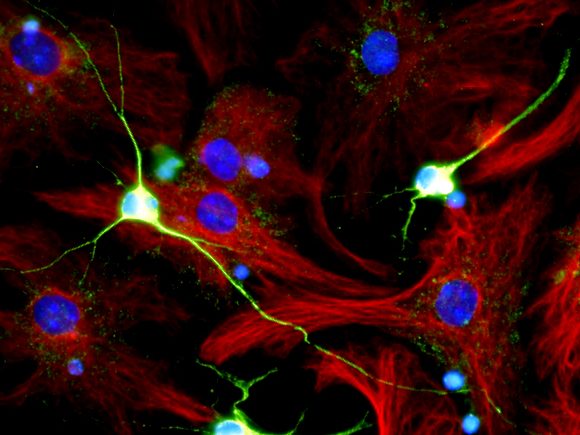
Another mechanism that is theorized to contribute to phantom limb pain is neuroma formation in the peripheral nervous system at the end of the residual limb (near the site of amputation). Neuromas form when peripheral axons attached to intact cell bodies attempt to regenerate, extending toward a target that no longer exists. This process leads to disorganized formation of a swollen mass of axonal sprouts, fibrous tissue, and Schwann cells called a neuroma.
In the early 2000s, Targeted Muscle Reinnervation, a surgical technique that rewires severed nerves to nearby muscles or intact motor nerves, was developed to improve patients’ control of their prosthetic limbs. However, the procedure was also shown to eliminate neuromas and drastically reduce intensity of phantom limb pain, suggesting that neuroma formation plays a key role in some cases of phantom limb pain (Goodyear et al., 2024).
Ultimately, targeting mechanisms that drive phantom limb pain has been pivotal in providing quality care for patients after amputation. The harm caused to many patients before the underlying mechanisms of phantom limb pain were addressed demonstrates the universal importance of mechanism-informed treatment. While mirror therapy and targeted muscle reinnervation have drastically improved treatment for phantom limb pain, they do not show equal degrees of efficacy across all patients, pointing to a need for personalized care. Looking ahead, the field aims to improve diagnostic measures to individualize treatment to patients’ distinct needs.
References
Andoh, J., Milde, C., Diers, M., Tropf, M., Reinhard, I., & Flor, H. (2020). Assessment of cortical
reorganization and preserved function in phantom limb pain: A methodological perspective. Scientific
Reports, 10(1), Article 11504. https://doi.org/10.1038/s41598-020-68206-9
Goodyear, E. G., O’Brien, A. L., West, J. M., Valerio, I. L., & Janes, L. E. (2024). Targeted muscle
reinnervation at the time of amputation decreases recurrent symptomatic neuroma formation. Plastic and
Reconstructive Surgery, 153(1), 154–163. https://doi.org/10.1097/PRS.0000000000010692
Guenther, K. (2016). ‘It’s all done with mirrors’: V. S. Ramachandran and the material culture of phantom limb
research. Medical History, 60(3), 342–358. https://doi.org/10.1017/mdh.2016.27
Johns Hopkins Medicine. (n.d.). Our services: Foot and leg amputation. Retrieved October 18, 2026, from
Kohno, T., Ji, R. R., Ito, N., Yamakura, T., Baba, H., & Noguchi, K. (2005). Peripheral axonal injury results in
reduced mu opioid receptor pre- and post-synaptic action in the spinal cord. Pain, 117(1–2), 77–87.
https://doi.org/10.1016/j.pain.2005.05.035
Makin, T. R., & Flor, H. (2020). Brain (re)organisation following amputation: Implications for phantom limb
pain. NeuroImage, 218, Article 116943. https://doi.org/10.1016/j.neuroimage.2020.116943
Ramadugu, S., Nagabushnam, S. C., Katuwal, N., & Chatterjee, K. (2017). Intervention for phantom limb pain:
A randomized single crossover study of mirror therapy. Indian Journal of Psychiatry, 59(4), 457–464.
Zhou, J. Y. (2019, August 6). Phantom-limb pain. ASRA Pain Medicine. Retrieved October 18, 2026, from
limb-pain

