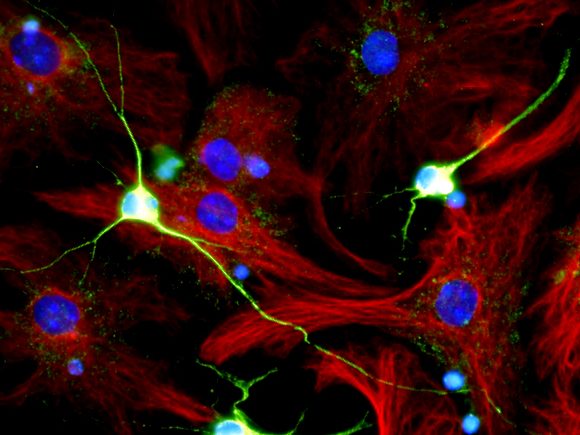
Progressive Multifocal Leukoencephalopathy (PML) is a rare, often fatal brain disease. PML is caused by the JC (John Cunningham) virus, which infects up to 85% of the population, but remains dormant in most people, being naturally suppressed by the immune system. Thus, individuals with severely weakened immune systems are at greater risk for acquiring the disease, as in these cases, the virus can reactivate. Its incidence in the US and Europe is about 4,000 cases per year.1
PML damages the brain’s white matter, consisting of neurons’ axons wrapped in myelin, a white fatty substance aiding in the propagation of electrical signals. The JC virus targets oligodendrocytes,2 cells responsible for synthesizing myelin in the central nervous system. When these glial cells are destroyed, axons demyelinate, impairing nerve signaling. This can lead to a total loss of neurons, contributing to additional neurological deficits, manifesting in outward apparent symptoms. This represents the “progressive” component of PML, as both the damage and neurological symptoms worsen over time.3
PML is also a multifocal disease, meaning symptoms may vary depending on which areas of the brain are affected. In the early stages, individuals may experience clumsiness, difficulty speaking or thinking, and muscle weakness due to the loss of myelination along axons. As the disease progresses, dementia, complete loss of speech and vision, and personality changes may occur as total white matter volume declines. The worsening of symptoms and even death, typically occur over a matter of weeks to months as the disease damages additional areas of the brain in a multifocal fashion.3 It typically begins with lesions at the junction of white and gray matter, which then grow and merge as the disease advances.4
Because the JC virus is very common among the population and usually remains dormant due to the immune system suppressing it, PML is more prevalent among immunocompromised individuals. Thus, HIV/AIDS, chemotherapy, and organ transplant patients, along with individuals taking immunomodulatory drugs for Multiple Sclerosis treatment, have the greatest chance of developing PML.5 For example, HIV/AIDS patients are one of the highest risk groups for developing PML because HIV (Human Immunodeficiency Virus) attacks and destroys CD4 T cells. These are vital immune cells necessary to fight off infections, and when HIV advances to AIDS (Acquired Immune Deficiency Syndrome), the body’s immune system becomes severely damaged.6 Thus, the JC virus can reactivate and spread to the brain. Additionally, Natalizumab, an immunosuppressant drug used to treat MS, is known to increase the risk of PML. It is a monoclonal antibody that works by binding to an integrin receptor on T and B cells (inflammatory immune cells) and preventing them from entering the brain via the blood-brain barrier. This ceases inflammation and lowers the number of new lesions and relapse rates in MS patients. However, because it suppresses immune activity, it can allow the JC virus to become active.7
It is not entirely known how the JC virus is transmitted, but it is thought to spread via respiratory droplets or contact with urine, as viral particles can be shed into urine.8 When dormant, the virus resides in the tonsils and kidneys prior to entering the bloodstream and crossing the blood-brain barrier. PML is usually detected via MRI, through which white matter lesions can be located, or via PCR (Polymerase Chain Reaction), in which the cerebrospinal fluid is tested to identify the DNA of the JC virus.5
There is currently no cure or treatment for the JC virus. Because of this, about 30-50% of patients die within a few months of diagnosis. However, if PML is triggered using immunosuppressant drugs, stopping those medications can allow the body to recover and the immune system to suppress the virus. Some patients live several years following their diagnosis, but the brain damage acquired is permanent since the white matter lost cannot regenerate.2
In conclusion, Progressive Multifocal Leukoencephalopathy is a rare but devastating disease caused by the JC virus. The immune system plays a vital role in suppressing the virus in healthy individuals, but when it is itself suppressed in immunocompromised people, the JC virus can reactivate and attack the brain’s white matter. Thus, continued research is essential to develop potential treatments against the JC virus at all stages, along with prevention strategies to limit its spread.
Works Cited
- Progressive Multifocal Leukoencephalopathy. (2021, May 14). https://rarediseases.org/rare-diseases/progressive-multifocal-leukoencephalopathy/. https://rarediseases.org/rare-diseases/progressive-multifocal-leukoencephalopathy/
- Khalili A, Craigie M, Donadoni M, Sariyer IK. Host-Immune Interactions in JC Virus Reactivation and Development of Progressive Multifocal Leukoencephalopathy (PML). J Neuroimmune Pharmacol. 2019 Dec;14(4):649-660. doi: 10.1007/s11481-019-09877-8. Epub 2019 Aug 27. PMID: 31452013; PMCID: PMC6898772.
- What is PML? (2023, August 31). Cleveland Clinic. https://my.clevelandclinic.org/health/diseases/6101-progressive-multifocal-leukoencephalopathy-pml
- Baldassari, L. E., Wattjes, M. P., Cortese, I. C., Gass, A., Metz, I., Yousry, T., Reich, D. S., & Richert, N. (2021). The neuroradiology of progressive multifocal leukoencephalopathy: A clinical trial perspective. Brain, 145(2), 426-440. https://doi.org/10.1093/brain/awab419
- What is JC virus? (2019, August 21). Verywell Health. https://www.verywellhealth.com/an-overview-of-john-cunningham-virus-4688570
- HIV & AIDS: Causes, symptoms, treatment & prevention. (2023, August 28). Cleveland Clinic. https://my.clevelandclinic.org/health/diseases/4251-hiv-aids
- Hutchinson M. Natalizumab: A new treatment for relapsing remitting multiple sclerosis. Ther Clin Risk Manag. 2007 Jun;3(2):259-68. doi: 10.2147/tcrm.2007.3.2.259. PMID: 18360634; PMCID: PMC1936307.
- Tan CS, Ellis LC, Wüthrich C, Ngo L, Broge TA Jr, Saint-Aubyn J, Miller JS, Koralnik IJ. JC virus latency in the brain and extraneural organs of patients with and without progressive multifocal leukoencephalopathy. J Virol. 2010 Sep;84(18):9200-9. doi: 10.1128/JVI.00609-10. Epub 2010 Jul 7. PMID: 20610709; PMCID: PMC2937633.

