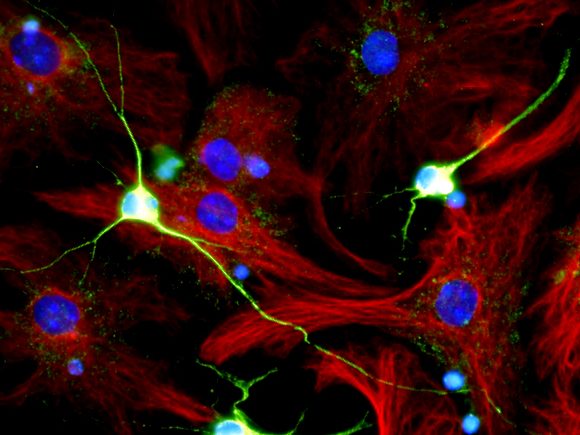
When we think about neurotransmission, excitatory signals come to mind, such as those created by the neurotransmitters epinephrine and acetylcholine. These neurotransmitters allow the electrical signal to be propagated to the next neuron. This process is extremely important for appropriate functioning of the nervous system. However, inhibitory signals are equally important; they dampen the activity of certain neurons, an often-overlooked yet vital step in neurotransmission. One rare neurological condition that impacts inhibitory signals is the autoimmune disease Stiff Person Syndrome (SPS).
In Stiff Person’s Syndrome, the activity of gamma-aminobutyric acid (GABA), the main inhibitory neurotransmitter of the central nervous system, is significantly reduced. This is due to the production of unique antibodies, called anti-GAD65 antibodies, which block glutamic acid decarboxylase (GAD). GAD is a key enzyme in the synthesis of GABA, converting glutamic acid (an excitatory neurotransmitter) into GABA within the axon terminal of presynaptic neurons. Without proper functioning of glutamic acid decarboxylase, not nearly enough GABA is present in the body. Thus, the nervous system becomes hyperexcitable, lacking the inhibitory signaling of GABA.
Due to the hyperexcitability of Stiff Person’s Syndrome, patients often have difficulty with muscle movement. Patients experience muscle stiffness and painful intermittent spasms in the torso or limbs, often triggered by stress, cold, noise, touch, or other stimuli. Symptoms vary in severity and typically worsen over time. As the syndrome progresses, patients may develop other symptoms such as hunched postures, unsteady gait, slurred speech, double vision, and mood disorders. Muscular reflexes are also affected, so people with SPS may have difficulty walking and be prone to falls. For some patients, the condition is limited to a specific region of the body (Partial SPS), but may spread over time. Generally, SPS is not fatal, but it may significantly impact quality of life and lead to other complications if left untreated.
Currently, there is no cure for Stiff Person’s Syndrome. However, treatment can lessen or alleviate certain symptoms, depending on severity. Benzodiazepines, such as diazepam, are often used for SPS. They reduce muscle spasms and stiffness by binding allosterically to GABA receptors and enhancing the effect of the GABA neurotransmitter present. Other treatments include oral muscle relaxers such as tizanidine and baclofen, and therapies used to reduce stiffness, such as heat therapy, hydrotherapy, massage therapy, and acupuncture. Since SPS is an autoimmune disease, some treatments slow disease progression by modifying or suppressing the immune system. This includes intravenous/subcutaneous immunoglobulins, plasma exchange, immunosuppressive therapy, and stem cell transplantation.
More research must be done into the role of GABA in neuromuscular signaling in order to develop therapies that completely alleviate symptoms. The severe symptoms of SPS have revealed the importance of GABA throughout the body and how functioning is drastically impaired without the presence of inhibitory signalling.
Sources
“Stiff Person Syndrome.” Barrow Neurological Institute, 11 Feb. 2026, http://www.barrowneuro.org/condition/stiff-person-syndrome/.
“Stiff-Person Syndrome.” National Institute of Neurological Disorders and Stroke, National Institutes of Health (NIH), 13 Mar. 2026, http://www.ninds.nih.gov/health-information/disorders/stiff-person-syndrome.
“Stiff Person Syndrome (SPS).” Johns Hopkins Medicine, The Johns Hopkins University, The Johns Hopkins Hospital, and Johns Hopkins Health System, 2026, http://www.hopkinsmedicine.org/health/conditions-and-diseases/stiff-person-syndrome-sps

