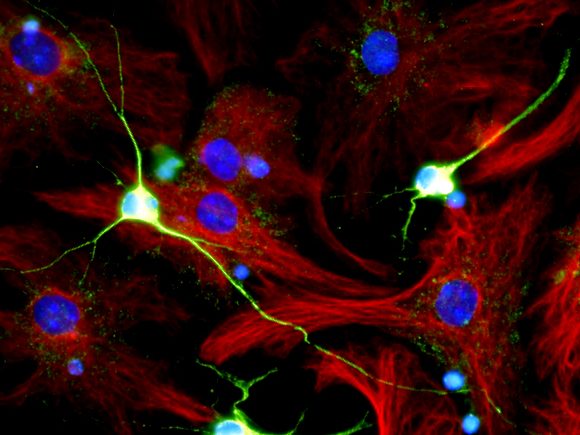
How often do we hear that children and young adults are the toughest, best equipped to handle the diseases we face? How often do those opposed to vaccination, for a variety of reasons, claim that they or their healthy children will not die from whatever illness they choose to forgo protection against? While that may hold true for some diseases, others, like the resurging measles cases in the United States, are not only highly transmissible and unpleasant, but also carry complications far more dangerous than the virus itself. You and your family may weather the storm of Measles morbillivirus, but no one escapes its far deadlier “brainchild”: Subacute Sclerosing Panencephalitis (SSPE).
Subacute Sclerosing Panencephalitis occurs in about 8 individuals per 100,000 measles cases, translating to roughly four cases per year in the United States. For children under five, however, this risk skyrockets to nearly 1 in 3,000. If this seems negligible, however, zero cases are seen in individuals vaccinated against measles. The NIH concludes that it is impossible to develop this debilitating disease without first contracting measles, and measles itself is effectively mitigated in populations with strong herd immunity through vaccination. Just how deadly and debilitating is SSPE? Symptoms appear 2–10 years after the initial measles infection, beginning with subtle neurological changes that quickly escalate into a devastating cascade. These include diminished intelligence, impaired motor control, frequent seizures, personality changes, severe dementia, vegetative states, and death in about 95% of cases. But, how and why does this happen?
The mechanism remains inconclusive by which the virus settles into its primary targets of the oligodendrocytes and the myelin of cortical neurons and its secondary regions such as the basal ganglia and midbrain remains inconclusive. Measles viruses are single-stranded negative-sense RNA viruses that rely on an RNA template to code for six structural proteins necessary for assembly, spread, and immune evasion. In most SSPE cases, the measles virus contains mutations in three genes — the M, F, and H genes. These genes encode proteins responsible for viral assembly and release (M), binding to target cells (F), and fusion and entry (H). SSPE mutations produce defective protein products that allow the virus to persist within brain tissue while evading immune clearance. When reactivated, the mutated SSPE virus triggers severe neural degeneration and inflammation, and may even spread through prion mechanisms resembling Alzheimer-like tau aggregation.
So how do we treat SSPE? As the old saying goes, prevention is the best treatment. Vaccination has been largely effective at preventing measles, causing SSPE incidence to drop dramatically, making large-scale research into curative therapies difficult. Some antiviral drugs, such as ribavirin, have shown modest reductions in anti-SSPE measles virus antibody levels (a common diagnostic criterion) in cerebrospinal fluid, with temporary improvements in seizures and cognitive impairment. However, these effects typically disappear once treatment stops, and meaningful benefits are usually limited to patients treated during the earliest stages of disease.
So what now? Empathetic and effective public health communication is essential. SSPE is a condition that could be completely eliminated. All that remains is meeting people where they are, educating ourselves and others, and recognizing what can happen years after a seemingly simple case of measles. In a world where SSPE is entirely preventable, allowing it to persist is no longer a scientific failure, but a human one.
References:
Hashimoto, K., & Hosoya, M. (2021). Advances in antiviral therapy for subacute sclerosing panencephalitis. Molecules, 26(2). https://doi.org/10.3390/molecules26020427
Pandey, N., Srivastava, N. K., Kumar, A., Hussain, I., & Joshi, D. (2024). A comprehensive expedition of tauopathies in subacute sclerosing panencephalitis (SSPE): A narrative review. The Egyptian Journal of Neurology, Psychiatry and Neurosurgery, 60(1), 96. https://doi.org/10.1186/s41983-024-00860-6
Rocke, Z., & Belyayeva, M. (2026). Subacute Sclerosing Panencephalitis. In StatPearls. StatPearls Publishing. http://www.ncbi.nlm.nih.gov/books/NBK560673/

